35 years of independence together: celebrating ITM
Think back to New Zealand in 1991. Jim Bolger was Prime Minister, the country's population was around 3.5 million compared with well over 5 million today, and unemployment was climbing above 10 percent. Businesses were still adjusting to the sweeping economic reforms of the previous decade, while greater exposure to international competition and changes in the way industries were structured were reshaping the commercial landscape.
The building industry was changing too. In 1991, a new Building Act introduced performance-based regulation and a national Building Code, beginning another period of significant change for the sector. Against this backdrop, a group of independent timber merchants around New Zealand were facing a much more immediate question: how could independently owned businesses survive and compete in this new environment?
Their answer was cooperation.
This year, Cooperative Business New Zealand member Independent Timber Merchants Co-operative, better known to generations of builders simply as ITM, celebrates 35 years since those 19 independent merchants came together in 1991. Today, ITM has grown into a nationwide network of more than 90 locally owned stores, but the fundamental idea behind the business remains remarkably similar to the one those merchants settled on 35 years ago: remain independent, while achieving collectively what would be much harder to achieve alone.
Born from a changing economy
ITM CEO Sara Johnson describes the environment facing the founders as something of an “existential crisis”. Economic reform through the 1980s had dramatically changed the competitive environment. Larger suppliers were consolidating and refining their manufacturing operations as they responded to growing competition from imported products. Further down the supply chain, independent timber merchants, some connected to second and third-generation sawmilling businesses, were confronting their own challenge. They needed scale.
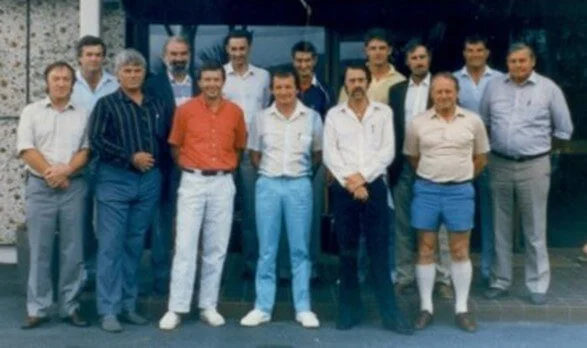
ITM's origin story has an appropriately Kiwi flavour. As Sara tells it, a small group of the founders met in a Northland pub to talk about what they could do. By combining their buying power and inviting other independent merchants around the country to join them, they could create the scale to compete without surrendering ownership of their individual businesses. Nineteen merchants joined in that first year.
Thirty-five years later, that original idea remains at the core of ITM.
From 19 merchants to a familiar Kiwi brand
Of course, what began as a solution to a buying problem became something much bigger. Over 35 years ITM has built a national identity around businesses that remain distinctly local, becoming a familiar name to generations of New Zealand builders and tradies.
For many New Zealanders of a certain age, part of that familiarity came through the radio. ITM's long-running advertising and its memorable “We’ll see you right” line became closely associated with the brand, capturing in a few words the practical, straight-talking service its locally owned stores wanted to represent. The line has endured too. Today ITM still promises trade customers the right products, right advice and right prices, followed by the familiar assurance: “We’ll see you right.” [You can reminisce and watch the vintage ad at the bottom of this article.]
That continuity is fitting. The brand may be national, but the experience behind it is deliberately local. ITM describes its model today as “Locally Owned. Nationally Backed.” It is a succinct description of what the cooperative has spent 35 years building.
Each member business remains independently owned and operated. Owners make decisions for their own businesses, employ their own people and respond to the particular needs of their customers and communities. Through the cooperative, however, they gain collective buying and brand power and access to shared services and capability.
Sara describes that independence as critical to ITM's success. An ITM operating in a provincial or rural community may face quite different customers and conditions from one operating in a major urban centre. Rather than requiring every business to respond in the same way, the cooperative allows individual owners to make decisions appropriate to their local market while benefiting from the scale of the wider network.
That combination has become, in Sara's words, ITM's “competitive advantage”.
The meaning of scale has changed
The value of scale today also looks quite different from 1991. Thirty-five years ago, the immediate challenge was purchasing building supplies and creating a collective brand. Those remain important, but today's independent businesses also face challenges around technology, data, artificial intelligence, cybersecurity and risk management. These are areas where investing collectively can give an independent business access to capabilities that would be difficult or expensive to build alone.
As Sara explained in our recent Co-op Leader Conversations podcast, the cooperative model still makes sense for many of the same core reasons it did in 1991. What has changed is the complexity of the environment and the areas in which members need scale.
The problems have changed. The logic of cooperation has not.
Built through 35 years of change
Few sectors demonstrate economic cycles quite like construction. Since ITM was established, its members have traded through recessions and housing booms, the Global Financial Crisis, the Christchurch earthquakes and rebuild, COVID lockdowns, shortages of building products and international supply chain disruption. More recently, they have faced another significant construction downturn.
Through each cycle, individual owners have been able to respond quickly to what they see happening in their own markets, adjusting staffing, stockholding, cash flow and operations while retaining the support of the national cooperative behind them. Interestingly, difficult conditions can also strengthen the case for cooperation. ITM has continued to attract independent merchants during the recent downturn and, for Sara, the reasons echo those that brought the original 19 businesses together in 1991. When the environment becomes more complex, the ability to share costs, capability, knowledge and risk becomes increasingly valuable.
Some of the most important benefits, however, are much harder to put on a balance sheet. ITM brings its owners together regularly, creating a network in which businesses can share experiences and solve problems collectively. As Sara puts it, there are not many problems that haven't already been “seen or witnessed or solved” somewhere across multiple businesses and 35 years of accumulated experience.
Individual ITM stores may technically be competitors, but each member has an interest in seeing the cooperative succeed. That accumulated knowledge, relationships and respect for each other and the brand, may be one of the most valuable assets ITM has built over its first 35 years.
Membership is a two-way street
That collective strength depends on members contributing to it. For Sara, the strongest members are those who look beyond the immediate benefit to their own store and ask what they can contribute to the cooperative as a whole. That can mean sharing expertise, mentoring another owner, helping a newer member or contributing time and experience to discussions about ITM's future.
“Successful members tend to think more broadly, beyond their own store. They think about what they are doing to make the cooperative great, and to help it for the future as well, because it's not a one-way street. The brand has changed lives for many people and it’s a significant value driver for their business, so they are focused on how to support and maintain it for everyone”
Sara says she has seen that contribution returned in unexpected ways, through referrals, partnerships, joint ventures, acquisitions and the support available when an individual business encounters a challenge. As an example, in January 2024 Takaka ITM suffered a catastrophic fire. The outpouring of support from other ITMs across the country meant they could stand up and start trading again within a couple of weeks. It is an important distinction between belonging to a buying group and participating in a cooperative. The value isn't simply what a member receives from the centre; it also comes from what members create for one another.
Guardianship, governance and the long game
ITM's anniversary also tells an interesting story about leadership. Sara describes her responsibility as the “guardianship of the cooperative”. Her job is not simply to lead ITM today, but to consider the organisation that members will need in five, 10 or 20 years. Leading owners is different from leading employees, and more than 96 independent businesses inevitably bring different experiences, priorities and opinions to the table. Sara sees emotional intelligence, humility, strategic thinking and listening as particularly important skills for a cooperative CEO.
That doesn't mean avoiding disagreement. In fact, she argues the opposite: “You cannot shy away from tension.” Rather than seeing disagreement between members as something to suppress, ITM deliberately creates opportunities for difficult issues to be discussed. Sara says she has repeatedly watched tensions resolved by the members themselves as different perspectives are brought into the room. It is another form of collective intelligence, not requiring everyone to think alike, but creating a structure in which different views can contribute to better decisions.
That member voice continues into ITM's governance. The ITM Board includes four elected member directors alongside two independent directors, combining external perspective with direct experience of owning and operating businesses within the cooperative. Member directors understand what decisions can mean on the ground and bring what Sara describes as values, passion and purpose to governance discussions.
There is also an important distinction to maintain. A member director may simultaneously be a store owner, shareholder and director of the wider cooperative, so ITM talks explicitly about which “hat” someone is wearing in a particular conversation. At the board table, the store-owner hat comes off and the governance hat goes on, with directors making decisions for the greater good of the cooperative. It is a simple practice that speaks to one of the distinctive challenges, and strengths, of cooperative governance.
Preparing the next generation
Thirty-five years also means ITM is increasingly thinking about another kind of change: generational succession. Some of its original founders remain involved in their businesses today, providing an unusual bridge between ITM's beginnings and its future. At the same time, ownership of member businesses will inevitably move to children, new owners, and new generations of entrepreneurs.
ITM has made succession a core pillar of its strategy. Its NextGen programme is bringing emerging owners together and helping them build their own connection with the cooperative, its brand and its purpose. For Sara, succession also involves deeply personal conversations with existing owners about what they want to happen to businesses they may have spent decades building.
Those discussions can involve family, identity, financial security and legacy. Sara describes them as “very intimate, high trust” conversations, sometimes held around a member's kitchen table before the owner has fully discussed the issue with their own family. It is another dimension of cooperative leadership that is rarely visible from outside. The objective is not simply to find a buyer for a business, but to help owners realise the value they have created while, where possible, keeping strong independent businesses within the ITM cooperative for another generation.
The endurance dividend
ITM's anniversary is also part of a much bigger New Zealand cooperative story. Cooperative Business New Zealand's Cooperative Economy Report 2025 found that currently registered New Zealand cooperatives average around 52 years old, compared with just over 11 years for limited companies. In other words, cooperatives endure almost five times longer on average.
We describe this as the “endurance dividend”: longevity allows organisations to accumulate knowledge, capability, relationships and institutional memory. In a cooperative, much of that value sits not only within the organisation itself but across generations of members.
ITM provides a tangible example. Its founders came together because the world around their businesses was changing and remaining independent was becoming harder. Thirty-five years later, New Zealand is larger, the building industry is different, technology is transforming how businesses operate, and the risks confronting independent businesses increasingly include things those founders in a Northland pub could scarcely have imagined, from cybersecurity to artificial intelligence.
Yet the basic challenge is surprisingly familiar: how can independent New Zealand businesses retain their ownership, local knowledge and entrepreneurial character while accessing the scale and capability needed to compete?
For ITM, the answer remains the one its founders arrived at in 1991: do it together.
Today, more than 96 locally owned stores carry that idea forward, backed by a national cooperative and a brand that has spent decades telling New Zealand builders, quite simply, “We’ll see you right.”
Congratulations to ITM's members, directors, employees and everyone who has contributed to the cooperative's first 35 years.
Here's to the next 35!
Read more articles